
What are Feasts and Fasts?
One of the distinctive gifts of Anglican Christianity is the liturgical calendar, a structured ordering of time around the life, death, resurrection, and ascension of Jesus Christ. The year is not merely a sequence of dates. It is a theological argument, a sustained claim that time belongs to God and that the Church’s movement through the seasons is itself a form of worship. At the heart of this ordering are feasts and fasts: days set apart for celebration or discipline, for rejoicing or self-examination, for the commemoration of sacred events and the saints who inhabited them. Understanding these days is not merely a matter of liturgical literacy. It is an invitation to enter more fully into the rhythm of grace that the BCP 2019 has ordered for the people of God.
The Two Cycles of the Christian Year
The BCP 2019 describes the Christian year as consisting of two interlocking cycles. The first is the Paschal Cycle, which follows the lunar calendar and orders time around the death and resurrection of Christ. It includes Lent, Holy Week, Easter, Ascension, and Pentecost, a movement that begins in the ashes of Ash Wednesday and arrives at the fire of the Day of Pentecost. The second is the Incarnation Cycle, which follows the solar calendar and places our Lord’s birth on December 25, with Advent preceding it and Epiphanytide following. As the BCP states: “The season of Lent precedes Eastertide and the Season after Pentecost follows it… The season of Epiphany follows the twelve days of the Christmas season.” (BCP 2019, p. 687)
Sunday is the structural heartbeat of the entire year. Every Sunday, regardless of the season, is a celebration of our Lord’s resurrection from the dead. The BCP notes that the celebration of any Sunday begins at sundown on the Saturday that precedes it, a practice rooted in ancient Jewish tradition, in which the day begins with evening. This means that the liturgical day is never merely a unit of time management. It is a theological statement before a word of the service is spoken.
The Principal Feasts
At the top of the calendar’s hierarchy sit the seven Principal Feasts, the highest days of the liturgical year, taking precedence over every other observance. The BCP 2019 names them on page 688: Easter Day, Christmas Day, Ascension Day, the Epiphany, the Day of Pentecost, All Saints’ Day, and Trinity Sunday. All Saints’ Day may also be observed on the Sunday following November 1. These feasts are non-negotiable in the sense that no other day or commemoration can displace them.
Each of the seven carries a distinct theological weight. Easter celebrates the resurrection, the event upon which the entire Christian faith rests. Christmas celebrates the Incarnation, the Word becoming flesh. Ascension Day celebrates Christ’s exaltation to the right hand of the Father and his ongoing priestly intercession for his people. Pentecost celebrates the outpouring of the Holy Spirit and the birth of the Church. Trinity Sunday is unique among them: every other Principal Feast commemorates a specific event in salvation history, but Trinity Sunday turns our attention from what God has done to who God eternally is, Father, Son, and Holy Spirit, one God in three persons. As we have noted in our article on Trinity Sunday, this is not a doctrine to master but a God to worship.
All Saints’ Day on November 1 gathers the whole communion of the faithful, those who have gone before and those still living, into a single act of praise. It is at once triumphant and forward-looking: the Revelation 7 vision of the great multitude before the throne declares that the saints have arrived, while Hebrews 12:1 reminds those still on the road that they are surrounded by that same cloud of witnesses, “therefore… let us run with endurance the race that is set before us.” (Hebrews 12:1, ESV) All Saints’ Day is the feast of the destination and the encouragement for the journey. The Epiphany on January 6 celebrates the manifestation of Christ to the Gentiles and the extension of the Gospel to all nations. Together, these seven feasts form the framework within which everything else in the calendar finds its meaning.
The Red-Letter Holy Days
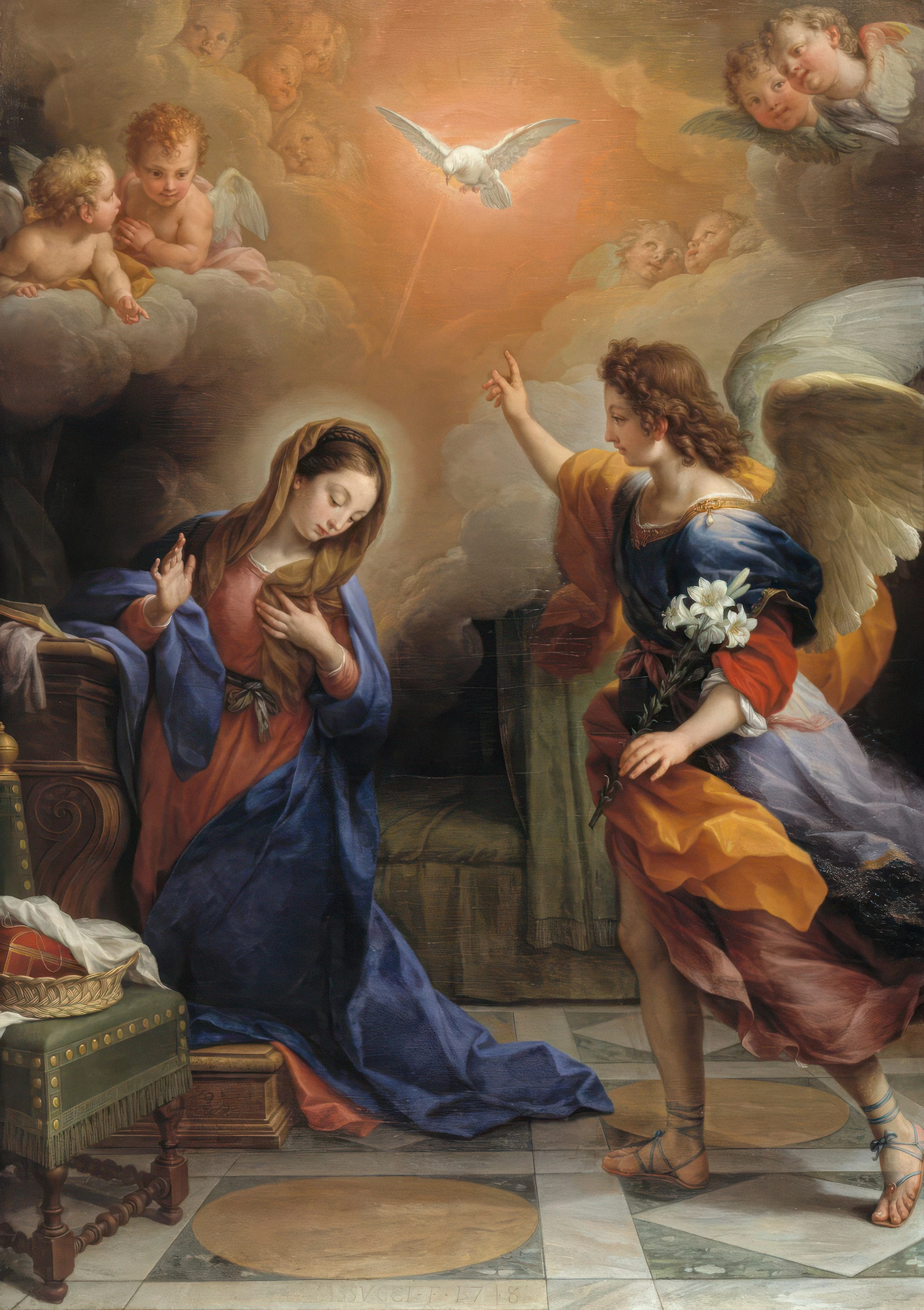
Below the Principal Feasts in the calendar’s hierarchy are the Holy Days, traditionally called Red-Letter Days because, in the practice of printing church calendars, these days appear in red ink, distinguished from the Optional Commemorations, which appear in ordinary black type. The BCP 2019 lists the Red-Letter Holy Days on page 688. They include, among others: the Circumcision and Holy Name of Our Lord Jesus Christ, January 1; the Presentation of Christ in the Temple, February 2; Joseph the Guardian of Jesus, March 19; the Annunciation, March 25; the Visitation, May 31; the Nativity of John the Baptist, June 24; Mary Magdalene, July 22; the Transfiguration, August 6; the Virgin Mary, August 15; Holy Cross Day, September 14; Holy Michael and All Angels, September 29; James of Jerusalem, October 23; Stephen the first martyr, December 26; the Holy Innocents, December 28; and the Feasts of the Apostles and Evangelists. This is not an exhaustive summary, for the complete list, see page 688 of the BCP 2019.
These days are appointed with their own collects, propers, and lectionary readings. The word “proper” refers to the variable parts of the liturgy specific to a particular day, the collect, the assigned Scripture readings, the psalm, and sometimes a proper preface for the Eucharist, as distinguished from the “ordinary” parts of the service that remain constant throughout the year. Red-Letter Holy Days have full propers in the BCP 2019, with the collects beginning on page 624 and the propers on page 730. The BCP 2019 envisions the Holy Eucharist as the principal act of Christian worship on the Lord’s Day and on other major feasts (BCP 2019, p. 7), and the propers for each holy day provide the collect, readings, and proper preface that shape that Eucharistic celebration.
These days give human faces to the theological claims of the faith. The Visitation of the Virgin Mary to Elizabeth on May 31, for example, is not merely a pleasant scene of family reunion. It is the first proclamation of the Gospel, Christ already present in the womb, already sanctifying, already causing John the Baptist to leap with recognition. The Transfiguration on August 6 is not merely a dramatic mountaintop moment. It is the unveiled glory of the one who walked among us in apparent ordinariness, the Father’s voice confirming what only faith had claimed: this is my beloved Son. The Feast of Saint Barnabas the Apostle on June 11 is not merely a commemoration of an early Christian figure. It is an annual invitation to examine what kind of ministry we are actually doing, whether we are seeking our own renown or the well-being of the Church, whether we are willing to stake our credibility on someone else’s behalf.
The rules governing when and how Red-Letter Holy Days are observed require a brief note. Any Holy Day that falls on a Sunday, other than in Advent, Lent, or the Easter season, may be observed on that Sunday or transferred to the nearest following weekday. The Feasts of Apostles and Evangelists follow the same general rule: they may be observed on a Sunday outside the penitential seasons, or transferred if they fall during Advent, Lent, or Eastertide. No holy day or observance can replace the fixed propers for Ash Wednesday, Holy Week, or Easter Week. And when any Holy Day falls on a Principal Feast, the feast always takes precedence. In 2026, for example, the Visitation, May 31, falls on Trinity Sunday. The BCP 2019 is clear: “These feasts take precedence over any other day or observance.” (BCP 2019, p. 689) The Visitation is observed in prayer and noted in the article for that week, but the Sunday worship is rightly given to the Principal Feast. Those planning services should consult pages 688–689 of the BCP 2019 for the full rubrics governing these decisions.
The Optional Commemorations
Beyond the Red-Letter Holy Days lies a third tier of observance: the Optional Commemorations listed in the Calendar of Holy Days and Commemorations beginning on page 691 of the BCP 2019. These are the Black-Letter Days of the Anglican tradition, named for their appearance in ordinary type in printed calendars. They include a wide range of figures from church history: teachers of the faith, reformers, missionaries, monastic founders, martyrs, and ecumenists drawn from both the Anglican tradition and the broader Christian world.
These commemorations may be observed or transferred as local needs dictate. The BCP provides collects in nine categories for those without specific appointed propers: Martyr, Missionary or Evangelist, Pastor, Teacher of the Faith, Monastic or Religious, Ecumenist, Reformer of the Church, Renewer of Society, and a general category for any saint. The daily psalms and readings at Morning and Evening Prayer are not usually superseded by these commemorations. They enrich weekday devotion and the Daily Office without displacing the rhythm of the lectionary.
The Principal Fasts
The BCP 2019 distinguishes between days of feast and days of fast, and the fasting days carry their own theological weight. The two principal fasts are Ash Wednesday, the first day of Lent, and Good Friday, the day of our Lord’s crucifixion. The BCP describes them as “days of special devotion and total abstinence.” (BCP 2019, p. 689) The phrase refers to fasting from food. The traditional Anglican practice is one full meal with no meat, rigorous but not extreme. For those with health conditions, dietary needs, or medical requirements that make even this form of fasting inappropriate, the BCP’s pastoral intent is better served by abstaining from meat or eating a noticeably simpler meal than usual. The goal is a deliberate interruption of ordinary comfort that sharpens attention toward God and the gravity of what these days commemorate, not suffering for its own sake. Ash Wednesday also appoints Maundy Thursday as a day observed with rites recalling the Last Supper and the betrayal at Gethsemane, a day of solemnity though not a principal fast.
Days of Discipline, Denial, and Special Prayer: Ember Days, Rogation Days, and Fridays
Beyond the two principal fasts, the BCP 2019 appoints additional days of discipline and denial. Every Friday of the year, outside the twelve days of Christmas and the fifty days of Eastertide, is observed as a day of fasting or abstinence in memory of the crucifixion. The weekdays of Lent carry the same character. These are not optional additions for the particularly devout. They are the ordinary rhythm of Anglican Christian life, built into the year as a regular practice of self-examination and penitence.
Ember Days are sets of three days, Wednesday, Friday, and Saturday, that occur four times a year, one set in each season, falling after four fixed points in the liturgical year: the third Sunday in Advent, the first Sunday in Lent, the Day of Pentecost, and Holy Cross Day. Their primary focus is prayer for those called to the ministry of the Church, ordained and lay, and fasting that puts the body behind the prayer. The BCP 2019 appoints two collects for Ember Days on page 634, along with appointed propers for two sets of services. A simple observance might look like this: on an Ember Wednesday, eat a plainer meal than usual, pray the first Ember Day collect at morning and the second in the evening, and bring before God by name one person in discernment for ministry or one clergy member in your parish. That is the whole of it. Our article on Ember Days explores their ancient roots and their particular urgency for a Church that needs more faithful laborers in a plentiful harvest.
Rogation Days are the three days immediately preceding Ascension Day, the Monday, Tuesday, and Wednesday of Ascension week. They are days of prayer for God’s blessing on agriculture, industry, and the created order, rooted in the Church’s ancient acknowledgment of human dependence on God’s provision. A Rogation Day observance is as simple as saying a prayer of thanksgiving over a meal, reading Deuteronomy 11:10–15, and asking God to bless the work of human hands in the world. They are distinct from Ember Days, which are directed primarily toward the Church’s ministry, though both share the practices of fasting and intentional prayer.
Why This Calendar Matters
It would be easy to regard the liturgical calendar as an elaborate piece of ecclesiastical machinery, useful for those who enjoy that sort of thing but essentially optional for ordinary Christian life. This would be a mistake. The calendar is a theological act. It is the Church’s claim that time is not neutral, that its passage is not merely a sequence of undifferentiated moments, but that it has been shaped by events of eternal significance and calls us to live in light of them.
The feasts do not exist to add obligations to the Christian life. They exist to give it shape and memory. Without the regular return of Ascension Day, the Church might forget that Christ is not absent but enthroned, reigning and interceding at the right hand of the Father even now. Without Holy Cross Day in September, the Church might lose its grip on the central claim of the faith: that forgiveness was not a divine concession but a costly act, purchased at the price of the Son. Without the Feast of Saint Barnabas each June, the Church might forget that the Kingdom advances not only through the bold and the gifted but through those who simply see something in another person and are willing to say so.
The fasts serve a parallel function. They resist the tendency of religious life to become comfortable and self-congratulatory. Ash Wednesday reminds us, with uncomfortable honesty, that we are dust. Good Friday forbids us from moving too quickly to the resurrection without pausing at the cross. The weekly Friday fast keeps the crucifixion as a present reality rather than a past event. Ember Days keep the Church aware that its ministry does not perpetuate itself automatically, that laborers must be called, formed, and sent, and that the congregation’s prayers are part of how that happens.
How to Begin
The liturgical calendar can feel overwhelming to those new to Anglican worship, and even those long accustomed to it can find that weeks and months slip by without much intentional engagement with its rhythms. A few simple practices and resources can help.
The full text of the BCP 2019 is available free of charge online, including the complete calendar, all collects, and the appointed propers for every feast and fast. For daily use, resources that follow the BCP 2019 lectionary and calendar are available for both iOS and Android. Printable liturgical calendars for each year, showing the color of the season and the Red-Letter Holy Days at a glance, are also widely available. For those planning services, the lectionary and propers for every Sunday and holy day are found beginning on page 716 of the BCP 2019.
In the remaining months of 2026, the Principal Feasts and Red-Letter Holy Days coming up include: the Nativity of John the Baptist, June 24; Peter and Paul, June 29; Mary Magdalene, July 22; James the Apostle, July 25; the Transfiguration, August 6; the Virgin Mary, August 15; Bartholomew the Apostle, August 24; Holy Cross Day, September 14; Matthew the Apostle, September 21; Holy Michael and All Angels, September 29; Luke the Evangelist, October 18; Simon and Jude, October 28; All Saints’ Day, November 1; and Christ the King, November 22. Marking these dates at the beginning of each month takes less than a minute and makes the difference between observing them and letting them pass unnoticed.
Begin with the Principal Feasts. If Ascension Day, Pentecost, and Trinity Sunday have passed without any particular observance, they are worth recovering next year. These are not obscure commemorations, they are the highest days of the Church’s year, and they carry theological weight that Sunday worship alone may not fully convey. Pray the collect. Read the appointed propers. Let the day be marked.
Then consider the Red-Letter Holy Days. Many of them fall on weekdays, and they do not require a full church service to observe meaningfully. Pray the collect from the BCP. Read the appointed Gospel. Let the day close with a question the feast puts to you. The Feast of Saint Barnabas asks: whose Barnabas am I? Mary Magdalene’s feast asks: am I willing to carry the news of the resurrection to those who have not heard it? The Transfiguration asks: am I living in light of the glory that was revealed on that mountain, or have I domesticated Jesus into something less than he is?
Finally, consider the fasts. The weekly Friday fast need not be elaborate, a simpler meal, a moment of prayer at noon, a brief reading of one of the Passion narratives. Ember Days, which occur four times a year, are a natural occasion for more intentional fasting and intercession for those in ministry. The BCP gives us everything we need to observe them. It remains only to notice when they arrive and to enter the rhythm they provide.
Conclusion
The Anglican calendar is not an end in itself. It is a means of grace, a structure that orders the Church’s attention toward Christ and his saving work, week after week and year after year. The feasts celebrate what God has done and who God is. The fasts create space for honesty about what we are and what we still need. Together they form a rhythm that the Prayer Book has ordered for the people of God: not to burden them with obligations but to shepherd them through the whole of the Christian life, season by season, from Advent’s expectation to the long green season of ordinary discipleship, and back again.
“Every Sunday is a celebration of our Lord’s resurrection from the dead.” (BCP 2019, p. 687) And around that resurrection, the whole calendar turns, its feasts declaring the glory of what God has done, its fasts making room for the transformation that is still underway.