
What is All Saints' Day?
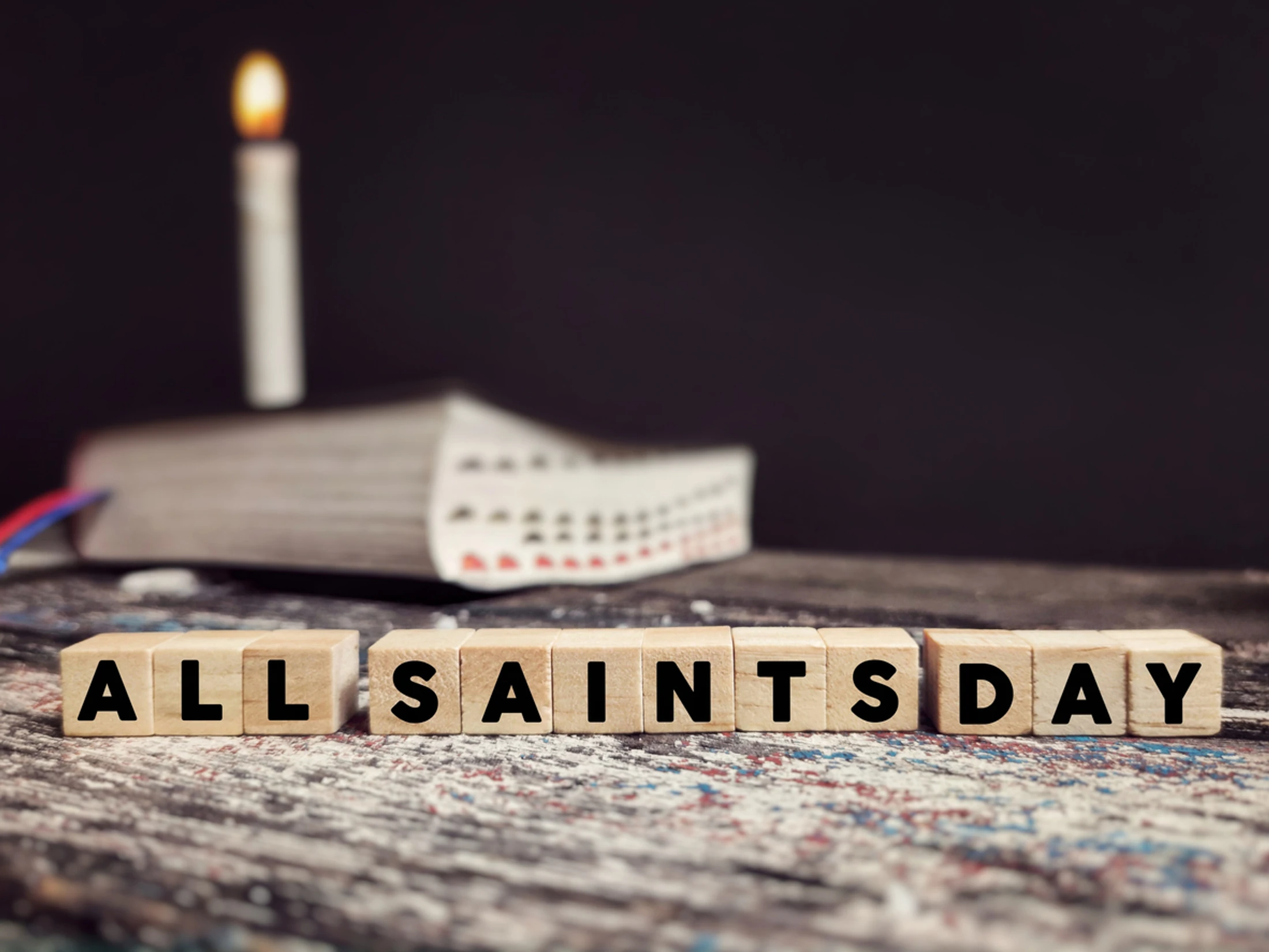
Every November 1, the Church lifts her eyes to the great cloud of witnesses who have gone before us in the faith. All Saints’ Day is not a mournful memorial but a triumphant family reunion at the Lord’s Table, where the living and the departed are knit together in the one Sacrifice of Christ.
The Calendar and the Communion of Saints
All Saints’ Day stands among the seven Principal Feasts of the Christian year—those great holy days second only to Easter in importance. The calendar itself becomes a sermon: the saints are not optional extras but essential members of the Body whose Head is Christ.
The day begins with a traditional Collect, a short gathering prayer that captures the heart of the feast:
Almighty God, you have knit together your elect in one communion and fellowship in the mystical Body of your Son Christ our Lord: Give us grace so to follow your blessed saints in all virtuous and godly living, that we may come to those inexpressible joys that you have prepared for those who truly love you; through Jesus Christ our Lord.
A Collect is a concise prayer that gathers the themes of the day. Here it speaks of the elect—those whom God has called into eternal life—and places us all within the mystical Body, the spiritual reality that every baptized Christian, living or departed, forms one living organism with Christ as Head. The saints are not distant icons but present companions, bound to us by the same Spirit who raised Jesus from the dead. Their lives are a path we walk "with" them toward the final banquet. The Collect’s language of “knitting” is no mere metaphor; it is a sacramental claim. Baptism begins the weaving; the Eucharist tightens every thread until the tapestry of the Church is complete in the New Jerusalem.
Eucharistic Theology and the Twofold Assembly
Anglican teaching on the Eucharist—Holy Communion—holds that when we receive the bread and wine, we are united not only with the risen Christ but with "all" his members, on earth and in heaven. The prayer over the gifts recalls Christ "offered himself once for all,” the single sacrifice on the cross. The saints now participate perfectly in that offering; we join them imperfectly but truly.
This is no mere memorialism. The 39 Articles, foundational to Anglican identity, declare the Lord’s Supper to be “a sacrament of our redemption by Christ’s death” and a “partaking of the Body of Christ” (Article 28). Cranmer’s liturgy, echoed in modern Anglican rites, frames the Eucharist as a "vertical" ascent and a "horizontal" expansion: up to God in thanksgiving, out to the whole company of heaven in communion.
The moment arrives in the Sanctus, the ancient hymn drawn from Isaiah 6 and Revelation 4: “ We praise you, joining our voices with Angels and Archangels, and with all the company of haven, who forever sing this hymn to proclaim the glory of your Name: Holy, holy, holy..” The company of heaven is no poetic flourish; it is the saints and angelic hosts who worship without ceasing. The veil between earth and heaven thins at the altar. The saints are co-worshippers, their voices blending with ours.
After Communion, the Post-Communion Prayer gives thanks: “you have fed us with the spiritual food of the most precious Body and Blood of your Son.” We are “living members” of the same Body as the saints. The distinction between “here” and “there” dissolves in the greater reality of the communio sanctorum, Latin for the communion of the holy ones—both people and things set apart for God. The Eucharist is the place where time is folded like a cloth: past, present, and future saints are all "now" in Christ.
The Lectionary: A Symphony of Witness
The Bible readings appointed for the day weave a single story. Revelation 7 unveils a countless multitude from every nation, robed in white, washed in the blood of the Lamb. John’s vision is not of a museum of statues but of a worshiping assembly, palms in hand, crying “Salvation belongs to our God!”
Matthew 5 (or Luke 6) presents the Beatitudes: Blessed are the poor in spirit, the meek, the persecuted. Jesus does not describe moral giants but the broken, the grieving, the hungry—for whom the kingdom is already breaking in.
Together these readings proclaim a theologia crucis, a theology of the cross. Sainthood is not superhero morality but faithful endurance under the sign of the Lamb. The Eucharist is where we "enact" that endurance, eating the broken bread and drinking the poured-out cup. The Beatitudes are not a checklist; they are a portrait of the Church as she is being conformed to her crucified Lord.
Liturgical Practice: Heaven on Earth
On All Saints’ Day, churches typically clothe the altar in white vestments, the color of purity and resurrection. The Gloria in Excelsis rings out—“Glory to God in the highest,” an ancient hymn of praise. The Creed is recited, usually the Nicene or Apostles’, affirming the “communion of saints” clause.
Some parishes include a necrology—a remembrance of the faithful departed, literally a “death list”—it may be printed or read aloud, often with a bell tolling after each name.
Conclusion: The Saints at Table
All Saints’ Day is not about dusty biographies but about Eucharistic reality. The saints are living members of the Body, present where Christ’s one sacrifice is pleaded and received. Their stories are sacramental signs of the Spirit’s work in ordinary weakness—nurses in air-raid shelters, mothers praying through sleepless nights, teenagers standing firm under peer pressure. Their prayers rise with ours before the throne of the Lamb.
Come to the Table. The saints are already there. "Lift up your hearts." We lift them to the Lord—who is the Holy One in whom all holiness consists.