
What is Christ the King Sunday?
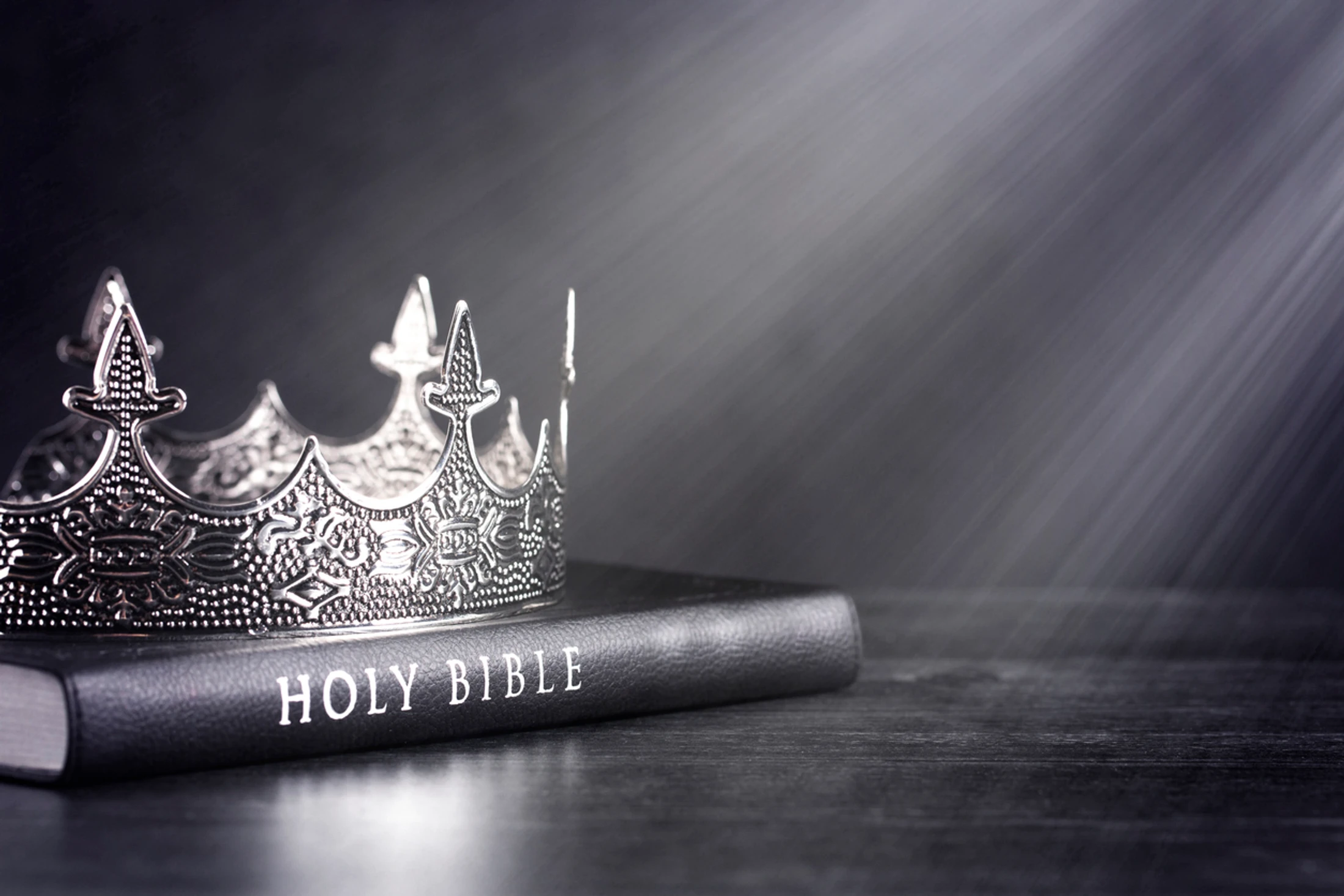
Christ the King Sunday holds a special place in the liturgical calendar of the Anglican Church. This feast, observed on the last Sunday before Advent, serves as a powerful reminder of the sovereignty of Christ and the significance of his reign in the hearts of Anglican believers. Rooted in centuries of tradition, this celebration stands as a testament to the Anglican commitment to worship, reflection, and the acknowledgment of Jesus as the supreme ruler.
The Origins
The origins of Christ the King Sunday trace back to the Roman Catholic Church, where Pope Pius XI established it in 1925 as a response to the growing secularism and the challenges posed by ideologies that sought to replace Christ's authority.
On 28 October 1922, Benito Mussolini’s black-shirted squadristi converged on Rome. King Victor Emmanuel III, fearing civil war, refused to declare martial law and instead invited Il Duce to form a government. Within weeks, fascist pageantry saturated public life: Roman salutes, eagle standards, bundles of rods (fasces), and the cry “Duce! Duce!” echoing in stadiums built for 100,000 voices. Mussolini styled himself the new Caesar, promising to “make the trains run on time” and to restore Italy to imperial greatness. The fasces—once a republican symbol—now adorned every post office and schoolroom.
Across the Alps, Adolf Hitler watched closely. Though jailed, he used the trial to prophesy a Thousand-Year Reich. By 1925, Mein Kampf was rolling off the presses, and the swastika—ancient sun-wheel turned death-wheel—was becoming the mandatory emblem of allegiance. Both dictators understood spectacle: uniforms, torches, anthems, oaths. Both demanded totale Hingabe—total surrender—to the Leader, the State, the Race.
The Crisis of Christendom
For Catholics, the danger was not merely political; it was theological. The Italian state had annexed the Papal States in 1870, reducing the pope to “prisoner of the Vatican.” The 1929 Lateran Treaty would restore a postage-stamp sovereign space, but in 1925 Pius XI saw a deeper captivity: the human conscience.
Fascist youth organizations replaced Catholic Action groups; Nazi teachers rewrote catechisms. Children saluted flags instead of crossing themselves. The modern state was not content to govern bodies; it wanted souls.
Pius’s earlier career equipped him to read the signs. As Achille Ratti, the pope's birth name, he had served as papal nuncio in Poland during the 1920 Bolshevik invasion. He watched Lenin’s commissars melt church bells for cannons and execute priests in the town square. Secular messianism, whether red or black or brown, always ended at Golgotha—only with the roles reversed.
Quas Primas: The Encyclical as Act of War
On 11 December 1925—the Feast of St. Damasus I, a pope who had defended orthodoxy against Arian emperors—Pius XI issued Quas Primas. The title is legal Latin: “In the first…”—as in, Christ is first, before every pretender. The encyclical is only 11 pages, but every paragraph is a cannon shot.
§6: “These manifold evils… have as their origin and cause the fact that… the notion of the royalty of Christ has been forgotten.”
§18: “The faithful… must desire that Christ may reign in civil society… in the enactment of laws, in the administration of justice, and in the education of youth.”
§24: “When once men recognize, both in private and in public life, that Christ is King, society will at last receive the great blessings of real liberty, well-ordered discipline, peace and harmony.”
The pope did not merely describe a spiritual kingdom; he asserted a social reign. Nations, parliaments, courts, classrooms—all must bend the knee. The encyclical ends with the institution of a new feast: the Sunday before All Saints (last Sunday of October in the old calendar), to be celebrated with “the greatest possible splendor.”
Liturgy as Counter-Pageantry
Rome wasted no time. In 1926, St. Peter’s Basilica hosted the first universal observance. White banners embroidered with the Chi-Rho replaced fascist black. The opening anthem sang Psalm 72: “Give the king your justice, O God.” The epistle was Colossians 1:12–20—Christ the “head of the body, the church… that in everything he might be pre-eminent.” The gospel: Pilate’s question, Jesus’ answer—“My kingdom is not of this world.” At the offertory, collections were taken for Catholic schools threatened by state takeover. The recessional hymn: Te Saeculorum Principem—“You, Prince of all the ages.”
Italian fascists grumbled but did not yet dare arrest bishops. In Germany, the 1926 celebration was smaller; by 1933, Hitler would ban it outright. Still, underground parishes kept the texts alive. One Jesuit remembered typing Quas Primas on a Gestetner mimeograph, the ink smudging like blood under his fingers.
From October to November: Vatican II’s Relocation
The feast’s original October date carried anti-Reformation overtones—31 October was Luther’s nail. After the Council, Paul VI’s 1969 Missale Romanum moved it to the last Sunday of the liturgical year. The shift was deliberate: Christ’s kingship now capped the entire saving story, not merely a polemic against Protestants. The new date also aligned with emerging Protestant lectionaries experimenting with a “Reign of Christ” Sunday.
Anglican Echoes and the 2019 BCP
Anglicans first encountered the feast through ecumenical contacts. The 1950s Lambeth Conference noted it with cautious approval. Yet, recognizing the need to reaffirm the lordship of Christ in a world fraught with shifting values, the 1979 American BCP made it official, and the ACNA 2019 text adopted the post-Vatican II date and title. The collect’s petition—“that the peoples of the earth, divided and enslaved by sin, may be freed and brought together under his most gracious rule”—still carries Pius XI’s DNA.
Every Generation Crowns Its Own Caesars.
In 1925 they wore black shirts and brown; today they wear hoodies in Silicon Valley or suits in Washington, DC... politicians with massive media influence, for good or for ill. The genius of Christ the King Sunday is its portability.
Pius XI never lived to see Hitler’s fall, dying in 1939 on the eve of war. But the feast he launched outlives every regime it was meant to oppose. Mussolini ended swinging from a meat hook; Hitler in a bunker with cyanide. Their banners are museum curiosities. On the last Sunday of the church year, white vestments still proclaim the victory of the King who conquered by dying—and who rules the nations with a rod of iron and a heart of love.
Anglican Liturgy for Christ the King Sunday
In Anglican churches around the globe, the liturgy of Christ the King Sunday includes readings, prayers, and hymns that emphasize Christ's role as the ruler of all creation. The majestic language and rich symbolism create an atmosphere of reverence, inviting worshipers to reflect on the profound implications of Christ's kingship in their lives.
At the heart of Christ the King Sunday is the recognition that Jesus is not just a historical figure but a living and present ruler. The chosen scripture passages include verses from the Psalms, the Old Testament prophets, and the New Testament Gospels that highlight the various aspects of Christ's kingship. The Gospel reading often features the encounter between Jesus and Pilate, emphasizing Jesus' declaration that his kingdom is not of this world.
Anglicans use Christ the King Sunday as a time for deep reflection on the implications of Christ's kingship for their personal lives and the broader society. Sermons during this time may explore themes of justice, compassion, and the call to live in accordance with the values of the kingdom of God. It is a time to examine one's allegiance and to recommit to the service of Christ as the ultimate sovereign.
Conclusion
In a world marked by shifting political landscapes and competing ideologies, Christ the King Sunday serves as a counter-cultural statement for Anglicans. It provides an opportunity to reaffirm faith in a kingdom not of this world, where Christ's reign transcends political affiliations and cultural trends. This celebration challenges Anglicans to live out their faith with a sense of purpose and commitment to the values of the kingdom.