
What is the Blessing of the Animals?
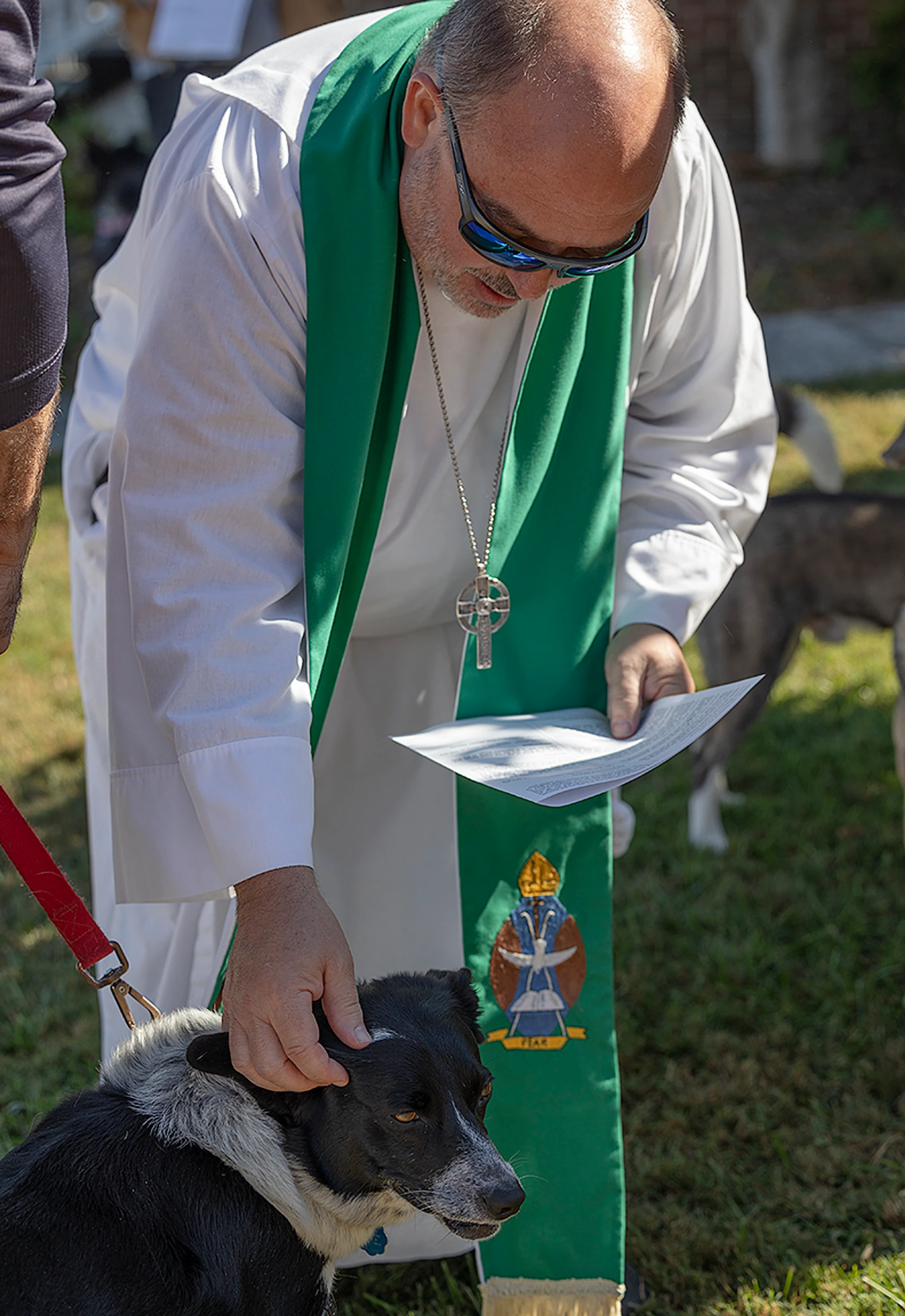
In the crisp autumn air, as leaves turn shades of gold and red, many Anglican churches across North America open their doors—or rather, their gardens and churchyards—to a peculiar procession. Dogs on leashes, cats in carriers, birds in cages, and even the occasional rabbit or fishbowl make their way into the mix. It's not a typical service, but a joyful, chaotic celebration known as the Blessing of the Animals.
Rooted in the legacy of St. Francis of Assisi, this rite invites us to pause and give thanks for the creatures who share our world, reminding us of God's profound care for all creation. From an Anglican perspective, this practice weaves together scripture, tradition, and a deep sense of stewardship. But what exactly is it, and does it find a home in our liturgical books like the 2019 Book of Common Prayer?
The Blessing of the Animals is a liturgical service where participants bring their pets or representations to receive a formal blessing from a priest or officiant. Often held on or near October 4, the feast day of St. Francis, it echoes the saint's famous "Canticle of the Creatures," extending familial affection to wolves, birds, and even fire. Francis, born in 1181 in Assisi, Italy, embodied a radical humility toward the natural world. Legend tells of him preaching to birds and taming a ferocious wolf in Gubbio, acts that symbolize harmony between humanity and the rest of creation. While not Anglican in origin—Francis was, after all, a Rooman Catholic friar—this tradition has been embraced by Anglicans over the centuries.
At its heart, the service is simple yet profound. The officiant offers prayers of thanksgiving for animals' roles in our lives—as companions, helpers, and symbols of God's generosity. Then comes a reading(s) from scripture highlighting God's delight in the created order. Individual blessings are given: "I bless [animal name] in the name of the Father, and of the Son, and of the Holy Spirit. Amen" Holy water might be sprinkled, and the rite might conclude with the Lord's Prayer and a dismissal that sends participants back into the world as caretakers of creation.
This isn't mere sentimentality; it's deeply theological. Anglicanism, with its emphasis on the incarnation—that God entered his creation in Jesus Christ—sees animals not as disposable resources but as part of the cosmos. The Blessing of the Animals invites us to reclaim our biblical mandate as stewards, countering the exploitation that has marked much of human history. In a time when species vanish at alarming rates, this rite calls us to repentance and renewal, urging churches to advocate for environmental stewardship alongside personal piety.
Scripture undergirds this practice with vivid imagery of God's creative love. Consider the creation narrative in Genesis, where the fifth and sixth days burst forth with life: "And God said, 'Let the waters swarm with swarms of living creatures, and let birds fly above the earth across the expanse of the heavens.' So God created the great sea creatures and every living creature that moves, with which the waters swarm, according to their kinds, and every winged bird according to its kind. And God saw that it was good. And God blessed them, saying, 'Be fruitful and multiply and fill the waters in the seas, and let birds multiply on the earth.' And there was evening and there was morning, the fifth day. And God said, 'Let the earth bring forth living creatures according to their kinds—livestock and creeping things and beasts of the earth according to their kinds.' And it was so. And God made the beasts of the earth according to their kinds and the livestock according to their kinds, and everything that creeps on the ground according to its kind. And God saw that it was good" (Genesis 1:20-25, ESV). Here, animals are not afterthoughts but deliberate expressions of divine goodness, blessed by God himself before humanity even appears.
Psalm 104 expands this vision, portraying God as the sustainer of all life: "O Lord, how manifold are your works! In wisdom have you made them all; the earth is full of your creatures. Here is the sea, great and wide, which teems with creatures innumerable, living things both small and great. There go the ships, and Leviathan, which you formed to play in it. These all look to you, to give them their food in due season. When you give it to them, they gather it up; when you open your hand, they are filled with good things. When you hide your face, they are dismayed; when you take away their breath, they die and return to their dust. When you send forth your Spirit, they are created, and you renew the face of the ground" (Psalm 104:24-30, ESV). This psalm, often appointed for creation-themed services, reminds us that animals depend on God daily, just as we do—a humbling equalizer in the divine economy.
Prophetic glimpses of restoration further enrich the rite. Isaiah envisions a messianic peace where predators and prey coexist: "The wolf shall dwell with the lamb, and the leopard shall lie down with the young goat, and the calf and the lion and the fattened calf together; and a little child shall lead them. The cow and the bear shall graze; their young shall lie down together; and the lion shall eat straw like the ox. The nursing child shall play over the hole of the cobra, and the weaned child shall put his hand on the adder's den. They shall not hurt or destroy in all my holy mountain; for the earth shall be full of the knowledge of the Lord as the waters cover the sea" (Isaiah 11:6-9, ESV). This eschatological harmony points to Christ's reconciling work, where the cross mends not just human sin but the fractures in creation itself (Romans 8:19-23).
Even in the apocalyptic finale of Revelation, creation joins the chorus of worship: "And I heard every creature in heaven and on earth and under the earth and in the sea, and all that is in them, saying, 'To him who sits on the throne and to the Lamb be blessing and honor and glory and might forever and ever!'" (Revelation 5:13, ESV). Animals, then, are not silent extras but vocal participants in the eternal praise, affirming that the Blessing of the Animals is no novelty but a foretaste of heavenly reality.
Within Anglicanism, this rite has evolved from informal gatherings to structured liturgies. The ACNA has addressed this through its companion volume to the BCP, the Book of Occasional Offices (draft released in 2025, with finalization ongoing). Titled "The Blessing of Animals on the Commemoration of Francis of Assisi," this liturgy appears in the "Season after Pentecost" section, pegged to October 4 but adaptable for other times.
The officiant is normally a priest, though lay-led versions are possible in informal settings. If offered standalone, it opens with a collect and lesson, such as Genesis 1 or Psalm 148. A litany follows, interceding for domestic and wild creatures alike: for pets' health, farmers' livestock, and endangered species. The blessing prayer invokes God's wisdom in creation, asking that the animals "be signs of his providence and delight to those who care for them." Rubrics encourage outdoor settings, with provisions for noisy participants—after all, a barking dog is as valid a response as an amen. This rite, while not canon, embodies the ACNA's commitment to "biblical, historic, and ecumenical" worship, allowing local creativity within guardrails.
These gatherings foster community, especially for children, who learn empathy through touch—a kitten's purr or a goldfish's glide. Yet challenges arise: allergies and skittish animals. The liturgy wisely includes a moment of silence for reflection on stewardship, prompting prayers for ecosystems strained by human excess.
Theologically, the Blessing of the Animals challenges anthropocentrism (human-centeredness). In a denomination wary of "nature worship," it reaffirms that creation reveals God's glory (Psalm 19:1) without deifying it. It counters gnostic dualism (spirit good/flesh bad) by affirming the goodness of bodies—human, furry, feathered, or finned.
As we face a world where biodiversity plummets—over a million species at risk, per recent reports—this simple service becomes prophetic. It calls us to action: reducing waste, supporting conservation, and teaching the next generation to see Christ's beauty and blessing in the sparrow. St. Francis understood this; his life was a sermon in fur and feather.
In closing, the Blessing of the Animals is more than a pet parade—it's a celebration of creation's sacredness. This October 4, gather your furry friend (or a photo of a favorite wild one) and join the blessing. In doing so, you'll hear the echo of Francis's canticle: "Praised be You, my Lord, through all your creatures." May it renew your wonder, deepen your care, and draw you closer to the Creator who calls all things good.