
What is the Feast of St. Andrew the Apostle?
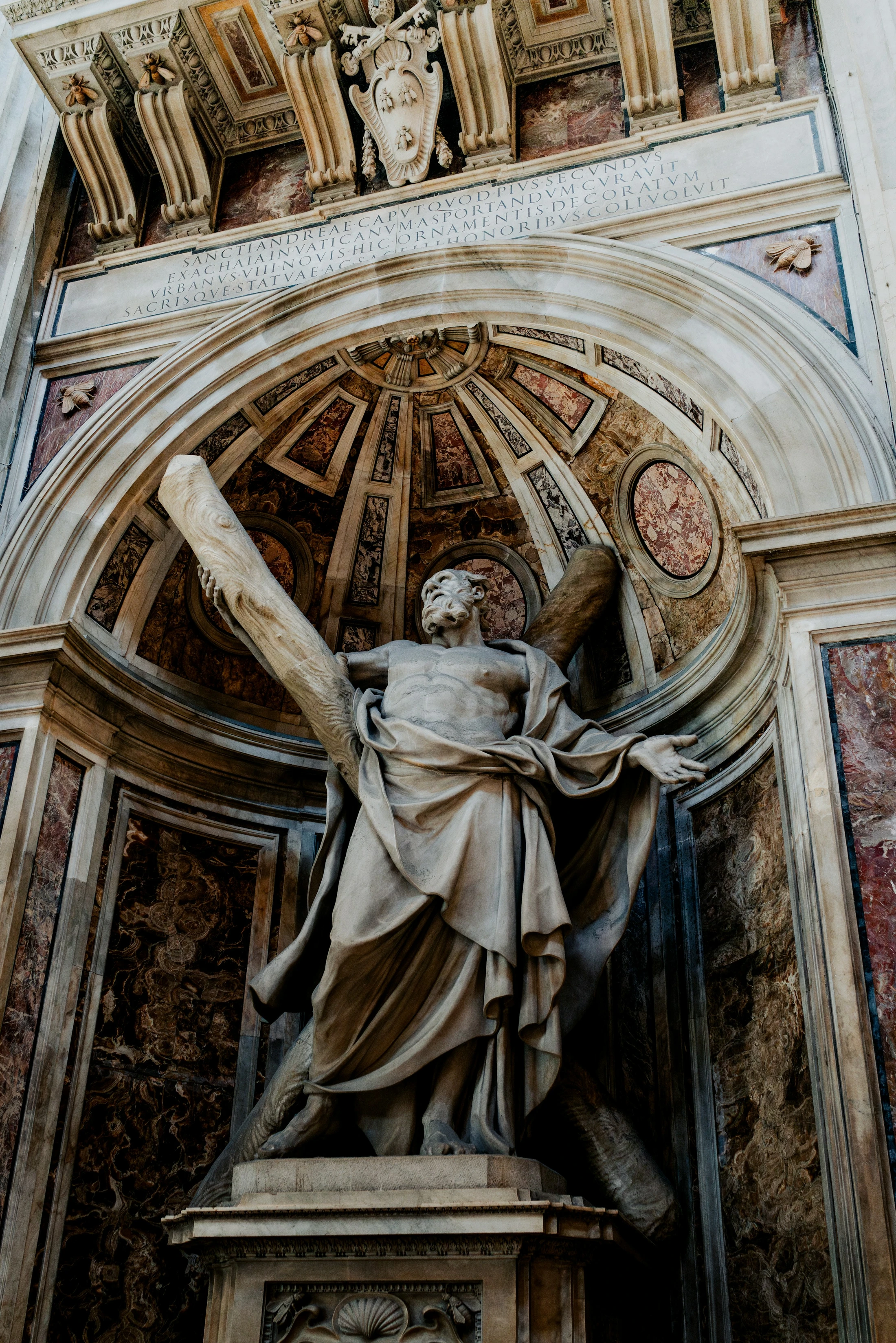
In the rhythm of the Christian year, November 30 stands out as the feast of Saint Andrew the Apostle. For Anglicans, this day is not merely a commemoration tacked onto the calendar’s end; it is the liturgical hinge that swings the church from the long green season into the purple (or blue) of Advent. Andrew’s feast heralds the coming of Christ with the same urgency that once drove a Galilean fisherman to abandon his nets and drag his brother to the Messiah. The 2019 BCP deliberately positions November 30 as the threshold of the new year, making Andrew the first voice in the chorus that cries, “Prepare the way.”
Who Was Andrew?
Scripture sketches Andrew in spare, decisive strokes. A fisherman from Bethsaida, brother to Simon Peter, he first appears as a disciple of John the Baptist. When John declares, “Behold, the Lamb of God,” Andrew follows Jesus without hesitation and spends the day with him (John 1:35–39 ESV). The next thing he does is decisive: “He first found his own brother Simon and said to him, ‘We have found the Messiah’ (which means Christ). He brought him to Jesus” (John 1:41–42). Later, Andrew surfaces at the feeding of the five thousand, presenting the boy with the loaves and fishes (John 6:8–9), and again among the inner circle asking about the temple’s fall (Mark 13:3). He is never the loudest voice, but he is always the connector.
Early tradition amplifies the portrait. The apocryphal Acts of Andrew sends him preaching along the Black Sea coast and suffering martyrdom on an X-shaped cross in Patras. Historical or not, the image endures: Andrew the bridge-builder, the one who brings others to the threshold of encounter.
Historical Roots of the Feast
Christians venerated Andrew by the fourth century. His relics reached Constantinople in 357, and November 30 emerged as his dies natalis, or martyr's death day, in both Eastern and Western calendars by the sixth century. In England, the veneration took early root. Northumbrian kings invoked him; missionaries from Iona carried his name to the continent. The medieval Sarum Use prescribed a vigil and proper Mass texts, while pilgrims streamed to St Andrews in Scotland—founded, legend says, when a Greek monk was guided in a dream to deposit relics on the Fife coast.
The English Reformers retained the day in the 1549 BCP but pruned vigils and eliminated any invocation of Andrew. The 1662 collect, still used in the 2019 BCP, distills the Reformed Anglican instinct:
Almighty God, who gave such grace to your apostle Andrew that he readily obeyed the call of your Son Jesus Christ, and brought his brother with him: Give us, who are called by your holy Word, grace to follow him without delay, and to bring those near to us into his gracious presence; who lives and reigns with you and the Holy Spirit, one God, now and for ever. Amen
Andrew as Advent’s Herald
The 2019 BCP elevates Andrew beyond mere chronology. The liturgical year now commences on the First Sunday of Advent, yet the fixed date of November 30 frequently falls in the week immediately preceding it. This is no accident. The rubrics treat his feast as a principal celebration, ensuring that the church’s final note before “O come, O come, Emmanuel” is the story of the First-Called.
Theologically, the placement is luminous. Andrew is the forerunner’s forerunner. John the Baptist will soon thunder in the wilderness, but Andrew is already moving—finding, following, fetching. His actions prefigure the entire Advent drama: the Word draws near, the seeker responds at once, and the good news spreads by personal witness. The lectionary underscores the link. The Gospel for the Eucharist is Matthew 4:18-22—Andrew’s call, along with Peter's—while Romans 10:8b–18 proclaims, “How beautiful are the feet of those who bring good news!” The collect’s petition to “follow without delay” becomes the first Advent imperative.
In the northern hemisphere, late November is the year’s nadir: daylight dwindles, fields lie fallow, the church has exhausted the Sundays after Pentecost. Andrew’s feast interrupts the dimming with a flare of apostolic red. Just as he pointed to the Lamb before the public ministry erupted, so his day ignites the season of expectation. The 2019 BCP’s structural choice thus transforms November 30 into a theological overture: the missionary impulse must precede the manger.
Medieval and Scottish Echoes
Scottish tradition deepens the Advent resonance. The national legend ties Andrew’s relics to the Battle of Athelstaneford in 832, when a saltire appeared in the sky and secured victory. Whether historical, the story casts Andrew as patron of a nation awaiting deliverance—a microcosm of Israel’s longing and the church’s eschatological hope. The X-cross, carried by seafarers and emblazoned on flags, became a sign of safe passage through winter storms toward the harbor of Christmas.
Three Advent Lessons from Andrew
1. Urgency of Response. Andrew did not wait for a second sign; he followed at once. Advent trains us in the same immediacy—watch, repent, believe the gospel.
2. Relational Evangelism. He brought his brother. The season’s invitation begins at home, in the ordinary ties that Andrew refused to sever.
3. Hidden Fidelity. Andrew speaks rarely in the Gospels, yet the church begins with his whisper to Peter. Advent reminds us that God’s kingdom advances through quiet obedience, not spectacle.
Conclusion
Andrew the Apostle Day is the church’s alarm bell at the edge of winter. The 2019 BCP plants it at the door of Advent so that the first face we meet is not the infant but the fisherman who left everything to point others to the Lamb. His feast is the liturgical equivalent of the Baptist’s cry: the light is coming, the nets must be dropped, the brother must be found. As purple vestments replace green and the wreath’s first candle flickers, Andrew stands at the threshold, arms outstretched, urging us across into the great waiting.