
What is the Feast of St. Matthew, Apostle and Evangelist?
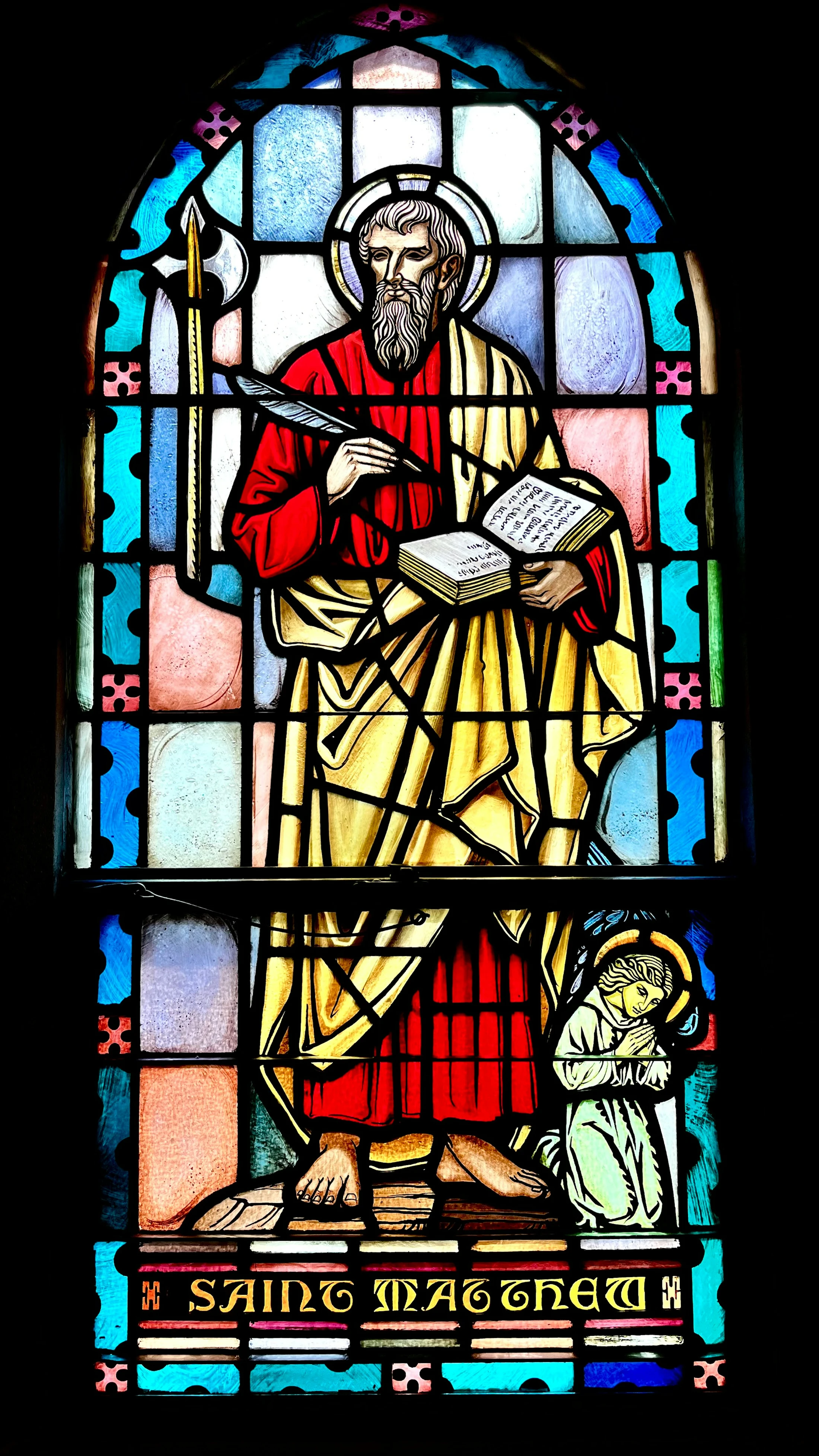
The Feast of St. Matthew the Apostle, celebrated on September 21, is a Red Letter Holy Day in the Anglican Church in North America (ACNA). This holy day honors Matthew, the tax collector turned apostle and evangelist, whose radical response to Christ’s call exemplifies the transformative power of grace. Guided by the readings in the ACNA’s 2019 Book of Common Prayer's (BCP), Proverbs 3:1-12, Psalm 119:33-40, 2 Timothy 3:1-17, and Matthew 9:9-13, this post explores the feast’s significance and how these Scriptures illuminate Matthew’s story and the call to discipleship. The feast invites us to embrace wisdom, obedience, and mercy as we follow Jesus in a challenging world.
St. Matthew: A Story of Transformation
Matthew’s journey begins with a pivotal moment in Matthew 9:9-13: “As Jesus passed on from there, he saw a man called Matthew sitting at the tax booth, and he said to him, ‘Follow me.’ And he rose and followed him” (v. 9, ESV). As a tax collector in first-century Judea, Matthew was likely despised, seen as a collaborator with Roman authorities. Yet Jesus chooses him, dining with sinners and declaring, “Those who are well have no need of a physician, but those who are sick… For I came not to call the righteous, but sinners” (vv. 12-13, ESV). This Gospel reading, central to the feast, highlights God’s mercy and the power of repentance.
Matthew, the author of the Gospel bearing his name, writes to show Jewish readers that Jesus fulfills Old Testament prophecies, inaugurating the Kingdom of God. His ministry may have extended to Judea, Ethiopia, or Persia, with some accounts suggesting martyrdom. Though historical details vary, Matthew’s legacy as an apostle and evangelist illustrates how God transforms the unlikely into bearers of His mission.
The Feast in the Anglican Tradition
St. Matthew’s feast, draws from ancient Christian practice, honoring saints (for protestants, saints are those worthy of emulating) as examples who point to Christ. As a Red Letter Holy Day, the Feast of St. Matthew takes precedence over Ordinary Time Sundays, calling parishes to reflect on apostolic vocation.
Parishes may hold a principal Eucharist with red vestments, symbolizing martyrdom and the Holy Spirit. Sermons often focus on Matthew’s transformation, urging congregants to respond to Christ’s call in our own lives—through vocations, service, or evangelism.
The 2019 BCP and the Appointed Readings
The 2019 BCP offers a comprehensive calendar of feasts (pp. 730-731). These readings enrich the celebration, illuminating Matthew’s call and Christian discipleship.
Proverbs 3:1-12: Wisdom and Trust
Proverbs 3:1-12 encourages fidelity to God’s commandments: “My son, do not forget my teaching, but let your heart keep my commandments, for length of days and years of life and peace they will add to you” (vv. 1-2). It urges, “Trust in the Lord with all your heart, and do not lean on your own understanding” (v. 5). This wisdom resonates with Matthew’s decision to leave his tax booth, trusting God’s call over worldly security. The passage also addresses God’s discipline: “My son, do not despise the Lord’s discipline or be weary of his reproof, for the Lord reproves him whom he loves” (vv. 11-12). For us, this challenges materialistic priorities and prepares us for the trials of discipleship, much like Matthew’s journey.
Psalm 119:33-40: A Heart for God’s Law
Psalm 119:33-40 is a prayer for guidance: “Teach me, O Lord, the way of your statutes; and I will keep it to the end… Incline my heart to your testimonies, and not to selfish gain!” (vv. 33, 36, ESV). This plea echoes Matthew’s shift from a life of “selfish gain” to one devoted to God’s mission. The psalmist prays, “Turn my eyes from looking at worthless things; and give me life in your ways” (v. 37, ESV), reflecting the new life Matthew found in Christ. This psalm encourages believers to seek God’s direction over the wisdom of the world.
2 Timothy 3:1-17: Scripture and Perseverance
In 2 Timothy 3:1-17, Paul warns of challenging times: “But understand this, that in the last days there will come times of difficulty. For people will be lovers of self, lovers of money…” (vv. 1-2, ESV). He affirms Scripture’s role: “All Scripture is breathed out by God and profitable for teaching, for reproof, for correction, and for training in righteousness, that the man of God may be complete, equipped for every good work” (vv. 16-17, ESV). This passage equips believers to rely on the wisdom of Scripture to navigate a secular culture as Matthew did in his ministry.
Matthew 9:9-13: Mercy Over Sacrifice
The Gospel, Matthew 9:9-13, recounts Jesus calling Matthew and dining with sinners, prompting criticism from the Pharisees. Jesus responds, “Those who are well have no need of a physician, but those who are sick. Go and learn what this means: ‘I desire mercy, and not sacrifice.’ For I came not to call the righteous, but sinners” (vv. 12-13, ESV). This underscores God’s pursuit of sinners and the desire to transform their hearts. It challenges worshippers to practice mercy in relationships, remembering that we too were once lost, mirroring Matthew’s journey from outcast to apostle.
The Collect of the Day
The BCP’s Collect for St. Matthew prays: “Lord Jesus, you called Matthew from collecting taxes to become your apostle and evangelist: Grant us the grace to forsake all covetous desires and inordinate love of riches, that we may follow you as he did and proclaim to the world around us the good news of your salvation; for with the Father and the Holy Spirit you live and reign, one God, now and for ever. Amen.” This prayer unifies the readings, seeking grace to follow Matthew’s example of obedience and surrender.
Theological and Practical Implications
The readings—Proverbs’ wisdom, Psalm 119’s obedience, 2 Timothy’s scriptural fidelity, and Matthew’s mercy—present Matthew’s journey as a model for disciples. Theologically, the feast teaches that saints like Matthew point to Christ, inspiring believers to fulfill the Great Commission. Practically, it prompts us to examine our priorities, asking if we, like Matthew, will leave our “tax booths” for Christ’s call.
Conclusion: Answering the Call
The Feast of St. Matthew celebrates God’s transformative grace. Through the readings, worshippers are called to trust God, obey His Word, and extend mercy. In a world often driven by selfish gain, Matthew’s story shines, urging us to rise and follow Jesus. On September 21, we honor not just an apostle, but the God who calls sinners to become saints, equipping them to proclaim His Kingdom.