
What is the Feast of the Confession of Peter the Apostle?
Feast Day: January 18
The Anglican calendar is ordered by a hierarchy of holy days, each carrying a different weight of observance. At the top sit the seven Principal Feasts, the highest days of the liturgical year. Below them are the Red-Letter Holy Days, appointed in the BCP 2019 with their own collects, propers, and lectionary readings, listed on page 688. They are called Red-Letter Days because, in the tradition of printing church calendars, these days appear in red ink, distinguished from the Optional Commemorations which appear in ordinary type. The Feast of the Confession of Peter the Apostle, observed on January 18, is one of these Red-Letter Holy Days. It commemorates not Peter's martyrdom or his missionary travels, but a single moment in the Gospel of Matthew: the moment when, at Caesarea Philippi, he said the words that changed everything.
"You are the Christ, the Son of the living God." (Matthew 16:16, ESV) Six words. The pivot point of Matthew's Gospel. The hinge on which the entire narrative turns. Before this confession, Matthew has been asking the question the whole world was asking: who is this man? After it, the question is settled, and everything moves toward the cross. The Feast of the Confession of Peter exists to place the Church before that confession every January and ask: do we still believe it? Do we still mean it? Are we still willing to say it at the same cost at which Peter eventually said it?
The Moment at Caesarea Philippi
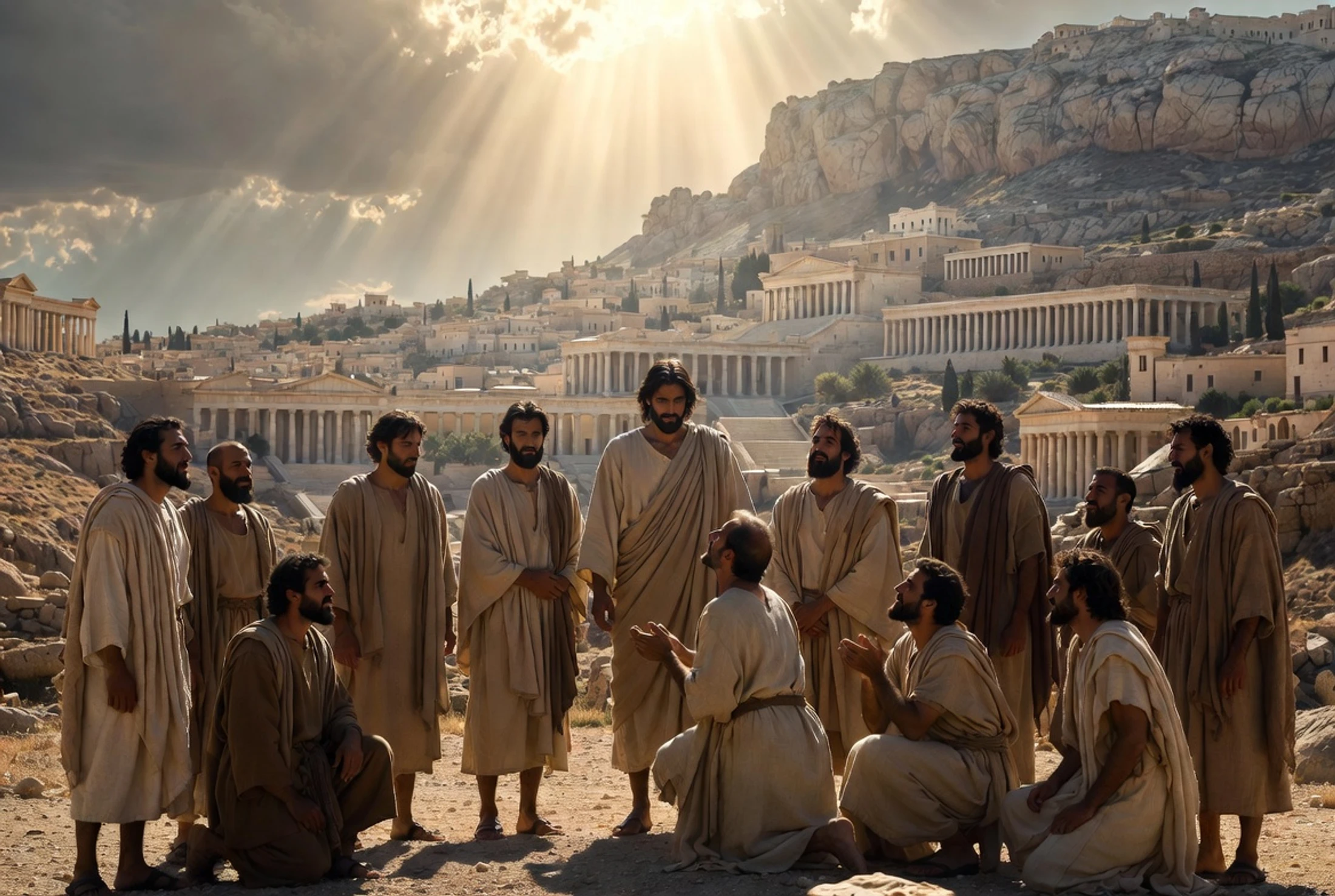
The account is in Matthew 16:13–19, the appointed Gospel for this feast. Jesus and his disciples have traveled north, to Caesarea Philippi, a Gentile city built by Herod Philip at the base of Mount Hermon, a place of pagan temples and political power, far from the religious center of Jerusalem. It is a deliberately provocative setting for the question Jesus is about to ask. In verse 13: "Now when Jesus came into the district of Caesarea Philippi, he asked his disciples, 'Who do people say that the Son of Man is?'" (Matthew 16:13, ESV) The disciples report what they have heard: John the Baptist, Elijah, Jeremiah, one of the prophets. The crowd has recognized something extraordinary in Jesus, but they have placed him within existing categories, great figures from Israel's past. He is remarkable, but he is explicable.
Then in verse 15 Jesus turns the question personal: "But who do you say that I am?" (Matthew 16:15, ESV) The shift from third person to second person is everything. Not who do people say, who do you say. The disciples have been with him through the healings, the feeding of the five thousand, the walking on water, the controversies with the Pharisees. They have more data than the crowd. The question presses them to move from observation to confession, from report to commitment. And Simon Peter answers for them all:
"You are the Christ, the Son of the living God." (Matthew 16:16, ESV)
Jesus' response to Peter's confession is immediate and theologically rich. In verse 17: "Blessed are you, Simon Bar-Jonah! For flesh and blood has not revealed this to you, but my Father who is in heaven." (Matthew 16:17, ESV) This is the first thing to notice: Peter did not arrive at this confession by his own insight or intelligence. It was revealed to him by the Father. The confession is not a human achievement. It is a gift of divine revelation. The Church does not confess Christ because it is clever enough to have figured him out. It confesses him because the Father has opened its eyes to see what flesh and blood cannot see on its own.
The Rock and the Keys
Jesus continues in verses 18 and 19: "And I tell you, you are Peter, and on this rock I will build my church, and the gates of hell shall not prevail against it. I will give you the keys of the kingdom of heaven, and whatever you bind on earth shall be bound in heaven, and whatever you loose on earth shall be loosed in heaven." (Matthew 16:18–19, ESV)
These verses have generated more theological controversy than almost any other passage in the Gospels. The debate centers on the word "rock": does Jesus establish the Church on Peter personally, or on the confession he has just made? While some Christian traditions have understood this as establishing a unique primacy in Peter and his successors, Anglican teaching has characteristically held that the foundation of the Church is the apostolic confession itself, that Jesus is the Christ, the Son of the living God, of which Peter was the first explicit spokesman. The Greek text supports this emphasis: Jesus says, "you are Petros" (pronounced PEH-tros, a masculine noun for a stone) "and on this petra" (pronounced PEH-trah, a feminine noun for bedrock) "I will build my church."
This reading is further strengthened by the consistent New Testament witness that the ultimate foundation is Christ himself (1 Corinthians 3:11) and that the Church is built on the foundation of the apostles and prophets with Christ Jesus as the cornerstone (Ephesians 2:20). Peter is honored as the first confessor and is given a leading role, but the Church's enduring rock is the revealed truth about Jesus, not any individual apostle.
The keys of the Kingdom and the authority to bind and loose speak to the Church's apostolic ministry of proclamation. To bind and loose in the rabbinic tradition meant to declare what is forbidden and what is permitted, to exercise the authority of interpretation and declaration. In the New Testament context, the Church's binding and loosing is its proclamation of the Gospel: the declaration of forgiveness to the penitent and the declaration of judgment to the impenitent. This authority was not given to Peter alone: Jesus gives the same authority to the disciples collectively in Matthew 18:18. The Confession of Peter is the moment when the Church receives its commission to speak with apostolic authority, not its own authority, but the authority of the one whose name it confesses.
The Appointed Readings
The propers for this feast are found on page 730 of the BCP 2019. Each of the four appointed readings illuminates a different facet of the confession and its consequences.
Acts 4:8–13 is Peter before the Sanhedrin. He has been arrested for healing a lame man in the name of Jesus, and the authorities ask by whose authority he has acted. His answer, filled with the Holy Spirit, is another confession: "Let it be known to all of you and to all the people of Israel that by the name of Jesus Christ of Nazareth, whom you crucified, whom God raised from the dead, by him this man is standing before you well." (Acts 4:10, ESV) And then verse 12, which is among the most absolute statements in the New Testament: "And there is salvation in no one else, for there is no other name under heaven given among men by which we must be saved." (Acts 4:12, ESV) The confession made in the hills of Caesarea Philippi is now made in the courtroom of the Sanhedrin. The stakes have risen dramatically. Peter does not soften it.
Psalm 23 is the appointed psalm, and its choice is richer than it first appears. The Lord as Shepherd connects directly to Peter's later commission in John 21, where the risen Christ three times asks Peter, "Do you love me?" and three times commands, "Feed my sheep." The man who confessed Christ as Lord is given the shepherd's work. Psalm 23's declaration, "The Lord is my shepherd; I shall not want" (Psalm 23:1, ESV), is the personal appropriation of the same faith that Peter proclaimed publicly at Caesarea Philippi. The Church confesses Christ as Lord in the assembly; it trusts him as shepherd in the valley of the shadow of death.
The Epistle reading is 1 Peter 5:1–11, in which Peter addresses the elders of the Church as a fellow elder and a witness of the sufferings of Christ. He writes with the authority of one who has confessed, denied, been restored, and suffered: "Humble yourselves, therefore, under the mighty hand of God so that at the proper time he may exalt you, casting all your anxieties on him, because he cares for you." (1 Peter 5:6–7, ESV) And then the great warning: "Be sober-minded; be watchful. Your adversary the devil prowls around like a roaring lion, seeking someone to devour." (1 Peter 5:8, ESV) The man who confessed Christ as the Son of the living God is the same man who later denied him three times by a charcoal fire. He knows better than anyone what it costs to keep the confession under pressure. His letter to the elders is not abstract pastoral theology. It is the hard-won wisdom of a man who failed and was restored and went on to die for the name he had denied.
The BCP 2019 Collect and Preface
The BCP 2019 appoints the following collect for the feast on page 626: "Almighty Father, who inspired Simon Peter, first among the apostles, to confess Jesus as Messiah and Son of the living God: Keep your Church steadfast upon the rock of this faith, that in unity and peace we may proclaim the one truth and follow the one Lord, our Savior Jesus Christ; who lives and reigns with you and the Holy Spirit, one God, now and for ever. Amen." The collect honors Peter's primacy among the apostles, "first among the apostles," while grounding the Church's foundation in the faith he confessed rather than in his person. The petition is that the Church would be kept steadfast upon the rock of this faith, proclaiming the one truth and following the one Lord. The feast is not primarily about Peter. It is about the confession that Peter made, and about the Church's need to keep making it, in every generation, under whatever pressure each generation brings.
The Preface of Apostles, found on page 155 of the BCP 2019, is used at the Eucharist for this feast and for all apostolic feasts: "Through the great shepherd of your flock, Jesus Christ our Lord, who after his resurrection sent forth his apostles to preach the Gospel and to teach all nations, and promised to be with them always, even to the end of the ages." (BCP 2019, p. 155) The preface places the apostolic commission within the resurrection narrative; it is the risen Christ who sends. The confession Peter made before the cross is the commission he received after the resurrection. Both are bound together in the Church's worship.
The Confession of Peter in Anglican Worship
The Feast of the Confession of Peter is one of the more unusual holy days in the Anglican calendar because it commemorates not Peter’s birth or death, but a moment of revelation and confession. The Church sets aside January 18 to remember not primarily something Peter accomplished, but what he was given to see and say: “You are the Christ, the Son of the living God.” (Matthew 16:16, ESV)
That distinction matters. Jesus immediately tells Peter that “flesh and blood has not revealed this to you, but my Father who is in heaven.” (Matthew 16:17, ESV) The confession is therefore both Peter’s confession and the Father’s gift. The Church does not stand because one apostle possessed unusual spiritual insight. She stands because God has revealed the identity of his Son and has given the apostolic Church a confession to receive, proclaim, and hand on.
The BCP collect captures this carefully. Peter is honored as “first among the apostles,” but the Church prays to remain “steadfast upon the rock of this faith.” Anglican worship therefore remembers Peter without separating him from the confession entrusted to him. The apostle matters because of the Christ he confesses.
Observing This Feast
The Confession of Saint Peter is observed on January 18 during the season of Epiphany. It is a Red-Letter Holy Day in the BCP 2019. In 2026, January 18 falls on a Sunday. According to the Prayer Book rubrics, a Holy Day falling on a Sunday outside Advent, Lent, and Easter may be observed on that Sunday or transferred to the nearest following weekday. (BCP 2019, p. 689)
The liturgical color for the feast is white. Although Peter would eventually die as a martyr, January 18 does not commemorate his martyrdom. It commemorates the revelation at Caesarea Philippi, when Peter confessed Jesus as “the Christ, the Son of the living God.” (Matthew 16:16, ESV) White is especially fitting during Epiphany, the season in which the Church celebrates the manifestation of Christ. Here Christ’s identity is manifested through the Father’s revelation: “Flesh and blood has not revealed this to you, but my Father who is in heaven.” (Matthew 16:17, ESV)
The color also helps distinguish this feast from those that commemorate apostolic martyrdom. The focus of January 18 is not the blood Peter would eventually shed for Christ, but the grace by which the Father revealed Christ to Peter and gave him the confession the Church continues to make.
The feast also stands exactly one week before the Conversion of Saint Paul on January 25, another white feast within Epiphany. Together they form a striking pair. At Caesarea Philippi, Peter receives revelation from the Father and confesses Jesus. On the road to Damascus, Paul encounters the risen Jesus whom he has been persecuting. Peter hears, “Flesh and blood has not revealed this to you, but my Father.” Paul hears, “I am Jesus whom you are persecuting.” (Acts 26:15, ESV)
Both revelations concern the identity of Christ. Both come by divine initiative. Both men are called and sent. Both will suffer for the Gospel. And both will ultimately be remembered together on June 29, the Feast of Saint Peter and Saint Paul.
To observe the feast, pray the collect from BCP 2019, p. 626. Read Matthew 16:13–19 slowly, pausing at Jesus’ question, “But who do you say that I am?” (Matthew 16:15, ESV) Read Acts 4:8–13 and notice how the confession made at Caesarea Philippi is later proclaimed under pressure before the Sanhedrin. Read Psalm 23 alongside Peter’s later calling to shepherd Christ’s flock, and read 1 Peter 5:1–11 as the pastoral counsel of an apostle who confessed Christ, failed under pressure, was restored, and learned to stand firm by grace.
Then let Jesus’ question become the Church’s question again: “But who do you say that I am?” The feast reminds us that the answer does not begin with human cleverness. The Father reveals, the Church receives, and by grace the Church confesses.
The Confession Today
In every age the question returns: "But who do you say that I am?" Today the pressure to soften, relativize, or sideline that confession is real, whether from cultural skepticism that treats Jesus as one spiritual option among many, or from within the Church when doctrinal clarity is traded for institutional unity. The Feast of the Confession of Peter calls us back to the same costly clarity Peter showed: not a vague spirituality, but the bold declaration that salvation is found in no one else (Acts 4:12). The Church that stands on this rock will face opposition, but the gates of hell will not prevail.
Observing This Feast
This feast falls on a Sunday in the season of Epiphany. According to the rubrics in the BCP 2019, when a Red-Letter Holy Day falls on a Sunday outside Advent, Lent, and Eastertide, the feast may be observed on that Sunday, replacing the usual Sunday propers, or transferred to the nearest following weekday, Monday, January 19. Many parishes choose to observe it on the Sunday itself so the whole congregation can hear the Confession of Peter proclaimed, while others keep the Sunday readings and commemorate the feast at a midweek Eucharist. Either approach is permitted.
To observe the feast: pray the collect from BCP 2019, p. 626. Read Matthew 16:13–19 slowly, pausing at verse 15, "But who do you say that I am?", and answer it personally before reading on. Read Acts 4:8–13, noting how the same confession made in the hills is boldly repeated in the courtroom. Read 1 Peter 5:1–11 for the hard-won pastoral wisdom of a man who failed and was restored. Let the feast close with the question the collect raises: is the Church, are we, steadfast upon the rock of this faith?
Conclusion
The Confession of Peter is not a feast about a great man. It is a feast about a great answer to a great question, an answer that was not Peter's own but was given to him by the Father. The Church returns to it every January because the question Jesus asked at Caesarea Philippi has never stopped being asked, and the pressure not to answer it has never stopped being felt. Every generation of the Church must say again, in its own context and at its own cost, what Peter said in the shadow of Mount Hermon: you are the Christ, the Son of the living God.
The collect prays that we would be kept steadfast. That prayer acknowledges what Peter's own life makes unmistakable: steadfastness in the confession is not a human achievement. It is a grace to be asked for, received, and held by the same Father who gave the confession in the first place. "Flesh and blood has not revealed this to you, but my Father who is in heaven." (Matthew 16:17, ESV) It was so for Peter. It is so for the Church.