
What is Trinity Sunday?
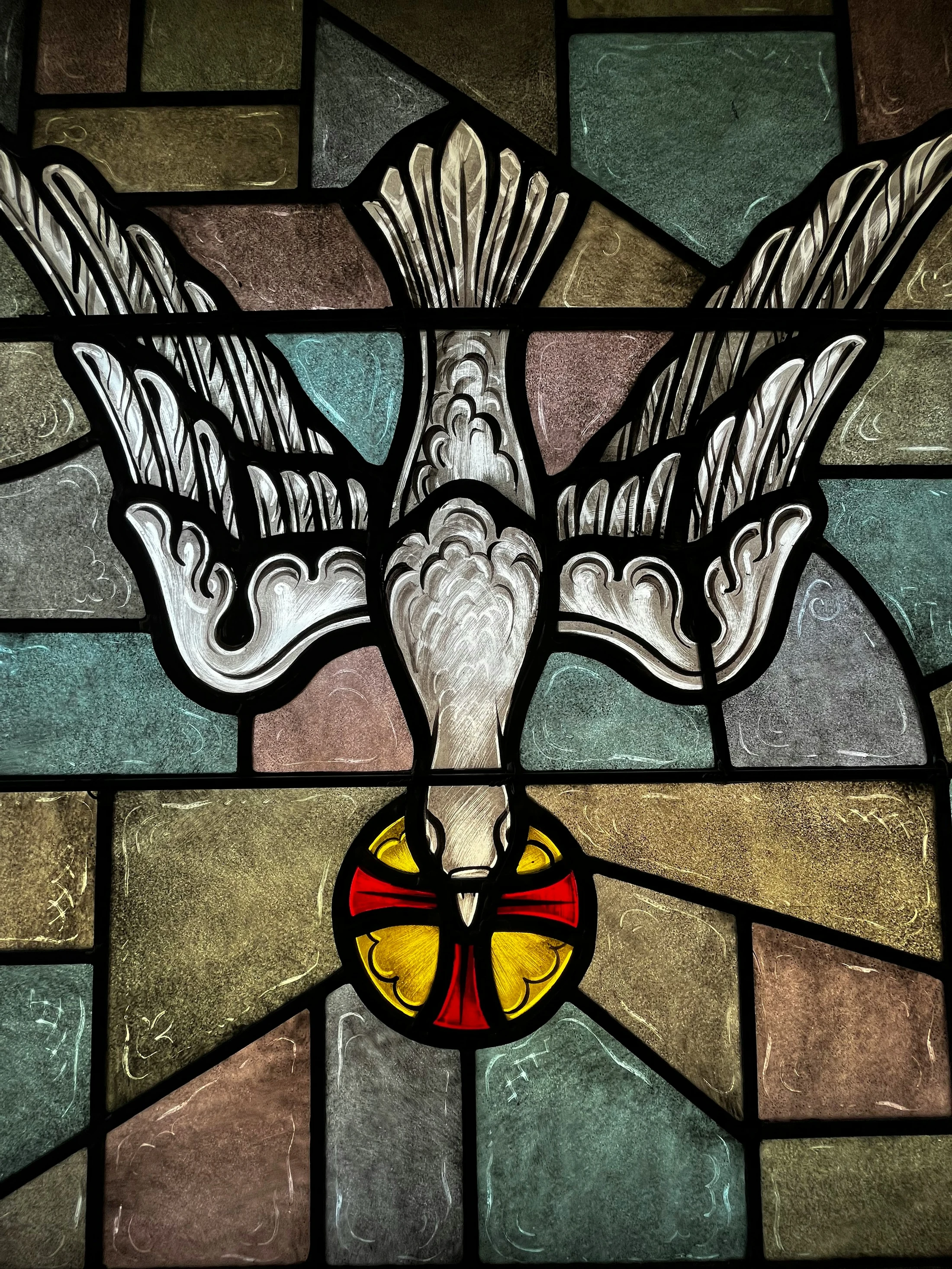
Principal Feast: First Sunday after Pentecost
The Anglican calendar is ordered by a hierarchy of holy days, each carrying a different weight of observance. At the very top sit the seven Principal Feasts, the highest days of the liturgical year, taking precedence over every other day or observance. They are Easter Day, Christmas Day, Ascension Day, the Day of Pentecost, All Saints' Day, Trinity Sunday, and the Epiphany, listed on page 688 of the BCP 2019. Trinity Sunday stands in this company on the first Sunday after Pentecost, and it is unique among the Principal Feasts. Every other feast commemorates a specific event in salvation history: a birth, a death, a resurrection, an ascension, an outpouring. Trinity Sunday commemorates no event. It turns the Church's attention from what God has done to who God eternally is.
This is a deliberate and theologically important distinction. The Church has spent the Advent and Christmas seasons contemplating the Incarnation, the Great Fifty Days of Easter celebrating the resurrection and ascension, and Pentecost receiving the outpouring of the Spirit. Trinity Sunday gathers all of this into a single act of adoration and asks: who is the God who has done all these things? The answer is the answer the Church has confessed since the earliest councils: one God in three persons, Father, Son, and Holy Spirit, co-equal, co-eternal, undivided. Trinity Sunday is the feast of that confession.
The Origins of Trinity Sunday
The doctrine of the Trinity did not emerge fully formed from a single moment in Church history. It was hammered out through centuries of controversy, careful reading of Scripture, and sustained theological reflection. The Council of Nicaea in 325 AD addressed primarily the question of the Son's relationship to the Father, definitively rejecting the Arian teaching that the Son was a created being subordinate to the Father. The full Trinitarian formulation, including the co-equal divinity of the Holy Spirit, was completed at the Council of Constantinople in 381, giving the Church the creed it still recites today. The struggle to articulate this doctrine was not merely academic. It was a fight for the Gospel itself, because a diminished Christ or a lesser Spirit means a diminished salvation.
The celebration of Trinity Sunday as a distinct feast developed considerably later than the doctrine itself. Alcuin of York composed a votive Mass in honor of the Trinity in the eighth century that became widely used on the Sunday after Pentecost throughout the Carolingian Church. The feast was associated with Thomas Becket, Archbishop of Canterbury, who was consecrated on the Sunday after Pentecost in 1162 and made a point of celebrating it with great solemnity. Pope John XXII formally added it to the calendar of the whole Western Church in 1334. It is worth noting that in the Anglican tradition, the Sundays that follow Trinity Sunday are historically counted as the First Sunday after Trinity, the Second Sunday after Trinity, and so on, a practice retained in the BCP 2019, which marks the long season of the Church year in this way.
The Doctrine of the Trinity
At the heart of Trinity Sunday is the confession that God is one in essence and three in persons: Father, Son, and Holy Spirit. The BCP 2019 articulates this in the Nicene Creed, recited during the Eucharist: "We believe in one God, the Father, the Almighty… We believe in one Lord, Jesus Christ, the only Son of God… We believe in the Holy Spirit, the Lord, the giver of life." (BCP 2019, p. 127) Three persons. One Lord. One faith. One God.
Scripture provides the foundation for this confession, though the word Trinity does not appear in the Bible. At Jesus' baptism, the Spirit descends like a dove and the Father's voice declares: "This is my beloved Son, with whom I am well pleased." (Matthew 3:17, ESV) All three persons are present in a single moment of revelation. The Great Commission commands baptism "in the name of the Father and of the Son and of the Holy Spirit" (Matthew 28:19, ESV); the singular "name" holding together the three persons in irreducible unity. And Paul offers the most liturgically beloved expression of Trinitarian faith: "The grace of the Lord Jesus Christ and the love of God and the fellowship of the Holy Spirit be with you all." (2 Corinthians 13:14, ESV)
The Trinity is a mystery, not in the sense of being irrational or incoherent, but in that it transcends the full comprehension of creaturely minds. We confess what has been revealed. We worship what we cannot exhaustively explain. This is precisely why a feast devoted to the doctrine is fitting: it calls the Church to bow in adoration before a God who is greater than our categories. Trinity Sunday is not primarily a day for teaching about the Trinity. It is a day for worshipping the Trinity.
The Theological Significance
Trinity Sunday anchors the Church in orthodox theology. In a world of competing spiritual visions, the doctrine of the Trinity distinguishes Christian faith from every form of unitarianism or vague theism, insisting that God is not a solitary monad but an eternal communion of love. The collect's language of "true faith" is not triumphalism; it is the acknowledgment that the Church holds a particular and irreplaceable confession about the nature of God, and that confession matters for everything else.
Trinity Sunday also shapes Christian community. The Trinity reveals that God is, in his very being, relational, Father, Son, and Spirit in perfect, self-giving love. The Church is not merely an institution; she is called to be an icon of that love. As Jesus prays in John 17:21: "that they may all be one, just as you, Father, are in me, and I in you." (John 17:21, ESV) The unity of the Church finds its source and pattern in the unity of the Godhead. Mission, forgiveness, hospitality, and the bearing of one another's burdens are not merely ethical obligations. They are Trinitarian life, the overflow of God's own love through his people into the world.
Trinity Sunday also points forward. The collect closes with the longing to see God "in your one and eternal glory," the beatific vision, the face of the Triune God, which is the final end and endless joy of all who are in Christ. The doctrine we confess today is the God we will behold forever.
The BCP 2019 Collect and Preface
The BCP 2019 appoints the following collect for Trinity Sunday on page 615: "Almighty and everlasting God, you have given to us your servants grace, by the confession of a true faith, to acknowledge the glory of the eternal Trinity, and in the power of your divine Majesty to worship the Unity: Keep us steadfast in this faith and worship, and bring us at last to see you in your one and eternal glory, O Father; who with the Son and the Holy Spirit live and reign, one God, for ever and ever. Amen." Notice the movement of that prayer: it begins with grace already given, the gift of true faith, and ends with eschatological hope, the promise of seeing God face to face in his eternal glory. Trinitarian worship is not merely intellectual assent to a doctrine. It is the posture of creatures made for communion with their Creator, already drawn into that communion by grace, and pressing toward its fullness in glory.
The Preface of Trinity Sunday, found on page 154 of the BCP 2019, is used at the Eucharist on this day: "Who, with your co-eternal Son and Holy Spirit, are one God, one Lord, in Trinity of Persons and in Unity of Substance. For that which we believe of your glory, O Father, we believe the same of your Son, and of the Holy Spirit, without any difference or inequality." (BCP 2019, p. 154) The preface is theologically precise in a way few liturgical texts manage to be. It does not merely name the three persons; it confesses the co-equality and co-eternity of each. What we believe of the Father's glory, we believe of the Son and of the Spirit, without difference, without inequality. The Arian controversy that nearly fractured the early Church is answered in a single clause, quietly and definitively, every Trinity Sunday at the Sursum Corda.
The appointed readings for Trinity Sunday are found on page 725 of the BCP 2019 and vary across the three-year lectionary cycle. Year A appoints Genesis 1:1–2:3, Psalm 150, 2 Corinthians 13:5–14, and Matthew 28:16–20. Year B appoints Exodus 3:1–6, Psalm 93, Romans 8:12–17, and John 3:1–16. Year C appoints Isaiah 6:1–7, Psalm 29, Revelation 4:1–11, and John 16:12–15. Each set illuminates the Triune God from a different angle: creation, redemption, sanctification; the voice at the burning bush, the love that sent the Son, the Spirit who leads into all truth.
Trinity Sunday in Anglican Worship
Trinity Sunday has held a distinctive place in Anglican worship from the beginning. Cranmer retained it in the first BCP of 1549 and ordered the Sundays that follow to be counted "after Trinity," a practice that gives the long green season its traditional Anglican name. The BCP 2019 maintains this, noting that the Sundays of the Season after Pentecost "may also be named 'After Trinity.'" The season that stretches from Trinity Sunday to the eve of Advent is the Church's longest season, and it is named for the feast that opens it.
Worship on Trinity Sunday often includes hymns that have carried the Church's Trinitarian praise across the centuries. Holy, Holy, Holy, with its ancient echoes of Isaiah's seraphim and the Nicene faith, is chief among them. The Eucharist is central, with the Trinitarian formula woven throughout the prayers and blessings. Sermons on this day bear a particular responsibility: to preach the Trinity not as a puzzle to be solved but as the living God to be loved. The doctrine is not the destination. The God the doctrine describes is the destination.
Observing This Feast
As a Principal Feast, Trinity Sunday takes precedence over every other observance. It always falls on a Sunday, the first Sunday after Pentecost, and requires no transfer.
To observe the feast: pray the collect from BCP 2019, p. 615. Read the appointed lessons for the year and let each one open a different window onto the Triune God, the Creator whose Spirit hovered over the waters, the Son through whom all things were made, the Spirit who leads into all truth. Recite the Nicene Creed as an act of deliberate confession, not mere repetition. Pray the preface as a personal doxology: you are one God, one Lord, in Trinity of Persons and in Unity of Substance; what we believe of the Father's glory, we believe the same of the Son and of the Holy Spirit, without difference or inequality. Let the day close with the collect's hope: bring us at last to see you in your one and eternal glory.
Conclusion
Trinity Sunday gathers all of Christian history, the Scriptures, the councils, the creeds, the centuries of prayer, into a single act of adoration before the one God in three persons: Father, Son, and Holy Spirit. It is a day to marvel at the mystery of God's eternal nature, to receive again the grace of belonging to him, and to live from that belonging in love and mission. The Triune God is not only the object of the Church's worship but the very source of her life, her community, and her hope in the world.
"Almighty and everlasting God… bring us at last to see you in your one and eternal glory, O Father; who with the Son and the Holy Spirit live and reign, one God, for ever and ever. Amen."